


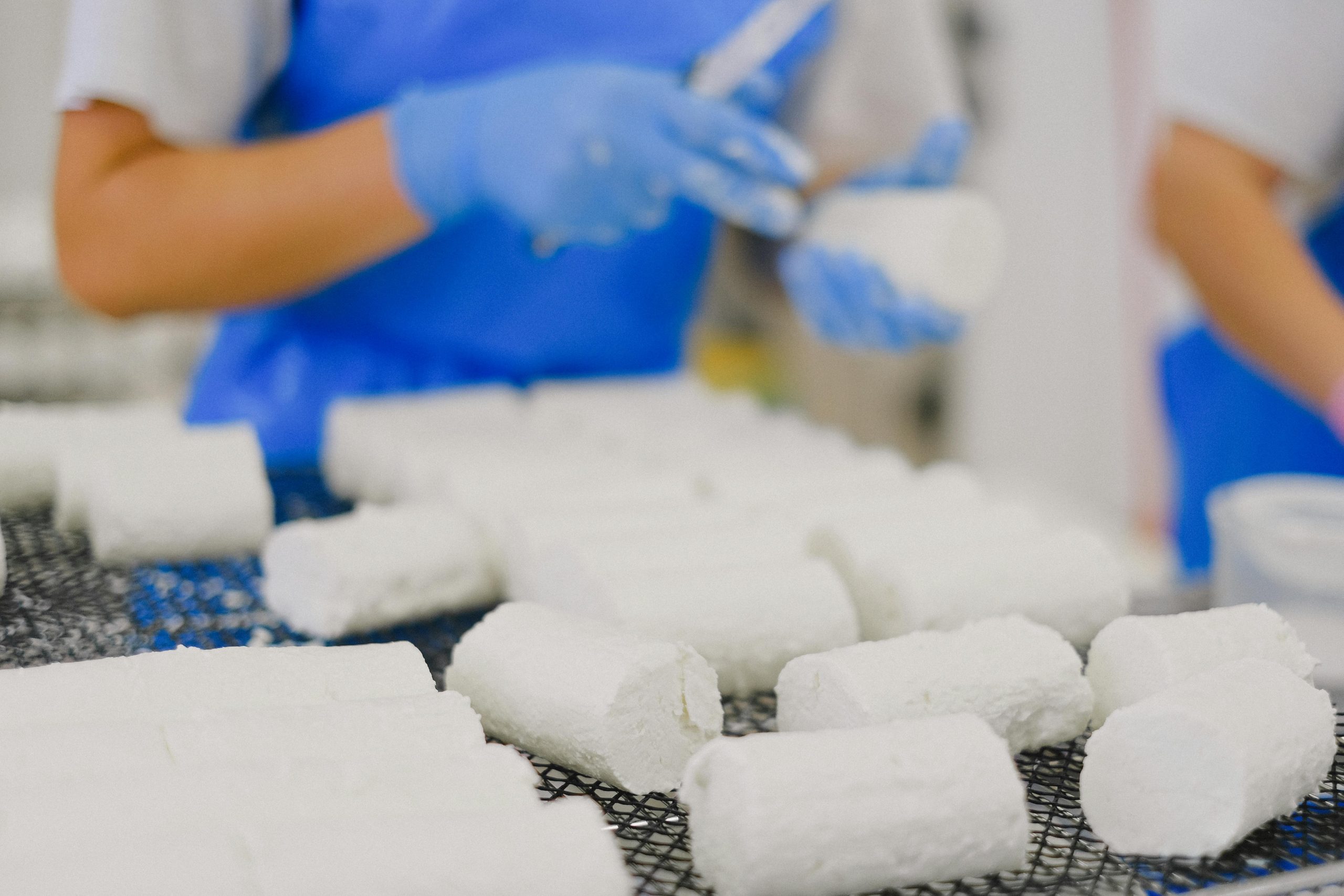
Whey is the most abundant by-product of the dairy industry. For every 10 litres of milk processed for cheese or casein, between 8 and 9 litres of whey are generated. In Romania, where hundreds of thousands of tonnes of milk are processed annually, we are talking about enormous volumes produced every single day, in every dairy plant across the country.
The problem is not that whey exists. The problem is what we do with it.
Whey in Romania: a hidden cost you pay every month
In a context where Romania’s dairy industry already faces serious pressures — rising energy costs, accelerating consolidation and increasingly aggressive European competition — inefficient whey management adds an additional burden that often goes unnoticed in the accounts.
In most Romanian dairy plants, whey is treated as industrial effluent. It is neutralised, diluted and discharged into the wastewater treatment plant or, in the case of smaller facilities, directly into the sewage network, with all the associated costs and compliance risks.
This means the plant pays twice: once for the milk from which the whey comes, and a second time to get rid of it.
The high organic content of whey — with a COD (chemical oxygen demand) value of 60,000–80,000 mg/L for sweet whey and even higher for acid whey — makes it one of the most demanding industrial effluents from a wastewater treatment perspective. A medium-sized plant processing 50,000 litres of milk per day can generate wastewater treatment costs of tens of thousands of euros per year just for managing unwanted whey.
What a European plant does with the same whey
Let’s take the same volume — 50,000 litres of milk processed daily — and see what happens to the resulting whey in a modern plant in Germany, the Netherlands or Denmark.
The whey does not go down the drain. The whey goes to the valorisation line.
Through centrifugal separation and ultrafiltration, whey is fractionated into components with high commercial value:
WPC (Whey Protein Concentrate) — the protein concentrate from whey, used in the sports supplements industry, functional foods and performance nutrition. International market prices range between €3,000 and €8,000 per tonne, depending on protein concentration (WPC 35, WPC 80) and purity.
Lactose — extracted from the permeate resulting after ultrafiltration, lactose has pharmaceutical applications (excipient in tablets), food applications (sweetener, texture improver) and technical uses. This is the same type of by-product valorisation we promote in other industries — similar to how brewery spent grain can be transformed from a costly residue into a valuable raw material with the right equipment.
Deproteinised permeate — used as a fermentation substrate (alcohol production, lactic acid, bioethanol) or as an ingredient in animal feed. The Romanian feed industry is looking precisely for such standardised sources of ingredients with controlled nutritional value — and whey permeate qualifies.
Whey fat — recovered through separation and reintegrated into the production process or valorised separately.
The result? The same volume of whey that generates costs in a Romanian plant becomes, in a European plant, a source of additional revenue worth hundreds of thousands of euros per year.
Why this isn’t happening here yet
The right question is not “why don’t we valorise whey?” — but “what has stopped us until now?”
The answers are more pragmatic than one might think.
Fragmented production. Many Romanian plants process relatively small volumes, insufficient to justify their own whey valorisation line. A WPC ultrafiltration system typically becomes cost-effective from a few hundred thousand litres of whey per day. Below this threshold, the investment does not pay back quickly — at least not in the conventional setup. However, more accessible approaches exist, which we will discuss below.
Lack of regional infrastructure. In Western Europe, whey collection and processing hubs exist that allow even small plants to contribute their volumes. A small cheese producer can deliver whey to a regional valorisation centre and receive a price for it. This infrastructure does not exist in Romania at the necessary scale — but this is also an opportunity for the first player who builds it.
The perceived cost of investment. Separation and ultrafiltration equipment represents a significant investment. Without a detailed feasibility analysis, many production managers conclude it “isn’t worth it” — without actually calculating what the current situation truly costs. A proactive assessment of existing installations can be the first step towards understanding the real potential of the production line.
The minimum compliance mindset. As long as the plant passes environmental inspections, the whey problem seems solved. The opportunity cost — what is lost by not utilising the whey — remains invisible in the accounts.
What the first step towards valorisation looks like
Not every plant needs to immediately invest in a complete WPC line. There is a gradual approach, adapted to the volumes and resources of each facility.
Step 1: Whey fat separation. Before anything else, sweet or acid whey can be passed through a centrifugal separator to recover residual fat. This can be reintegrated into production or sold. The investment is relatively low, with rapid payback.
Step 2: Whey concentration for biogas or animal feed. Whey concentrated through evaporation or primary ultrafiltration can become a valuable substrate for biogas installations — a direction we have analysed in detail in the broader context of integrated biogas and biomethane solutions for Romanian agriculture and the food industry.
Step 3: WPC or lactose production. At sufficient volumes or in collaboration with other plants in the region, installing a complete valorisation line becomes feasible. This requires ultrafiltration, nanofiltration and spray drying equipment — as well as centrifugal decanters for whey clarification and solid fraction separation.
The solutions we provide
Centrifugal separation and decanting — Flottweg
Flottweg centrifugal decanters and separators are used at all stages of whey processing: from initial clarification and fine particle removal, to casein separation, lactose dehydration and whey fat recovery.
Flottweg equipment is designed to the strictest food hygiene standards, compatible with CIP systems and capable of continuous 24/7 operation with optimised energy consumption. In addition to purchase, Flottweg centrifuges are also available for rental — a relevant option for plants that want to test the process or cover seasonal needs without major long-term commitments.
Wastewater treatment for the dairy industry — Huber Technology
Even with a whey valorisation line in place, the plant will continue to generate wastewater — from equipment cleaning, CIP processes, cooling water and other streams. Compliance with NTPA-002 limits for industrial discharges is mandatory.
Huber Technology equipment — fine screens, grit and grease separators, sludge dewatering systems — ensures efficient mechanical pre-treatment and significant reduction of organic load prior to biological treatment.
From problem to opportunity: a shift in perspective
Whey is a symptom. The broader problem is that Romania’s dairy industry does not yet treat by-products as assets. The circular economy logic — which we also promote in the context of circular agriculture in Romania — applies fully to the dairy plant as well: what costs money today can become, with the right equipment and processes, a source of added value.
If you find yourself in a situation where whey is a problem to be managed rather than an opportunity to be explored, we invite you to a conversation. We will audit the volumes and flows in your plant and present feasible scenarios, with real figures.
Contact us for a free audit.
