


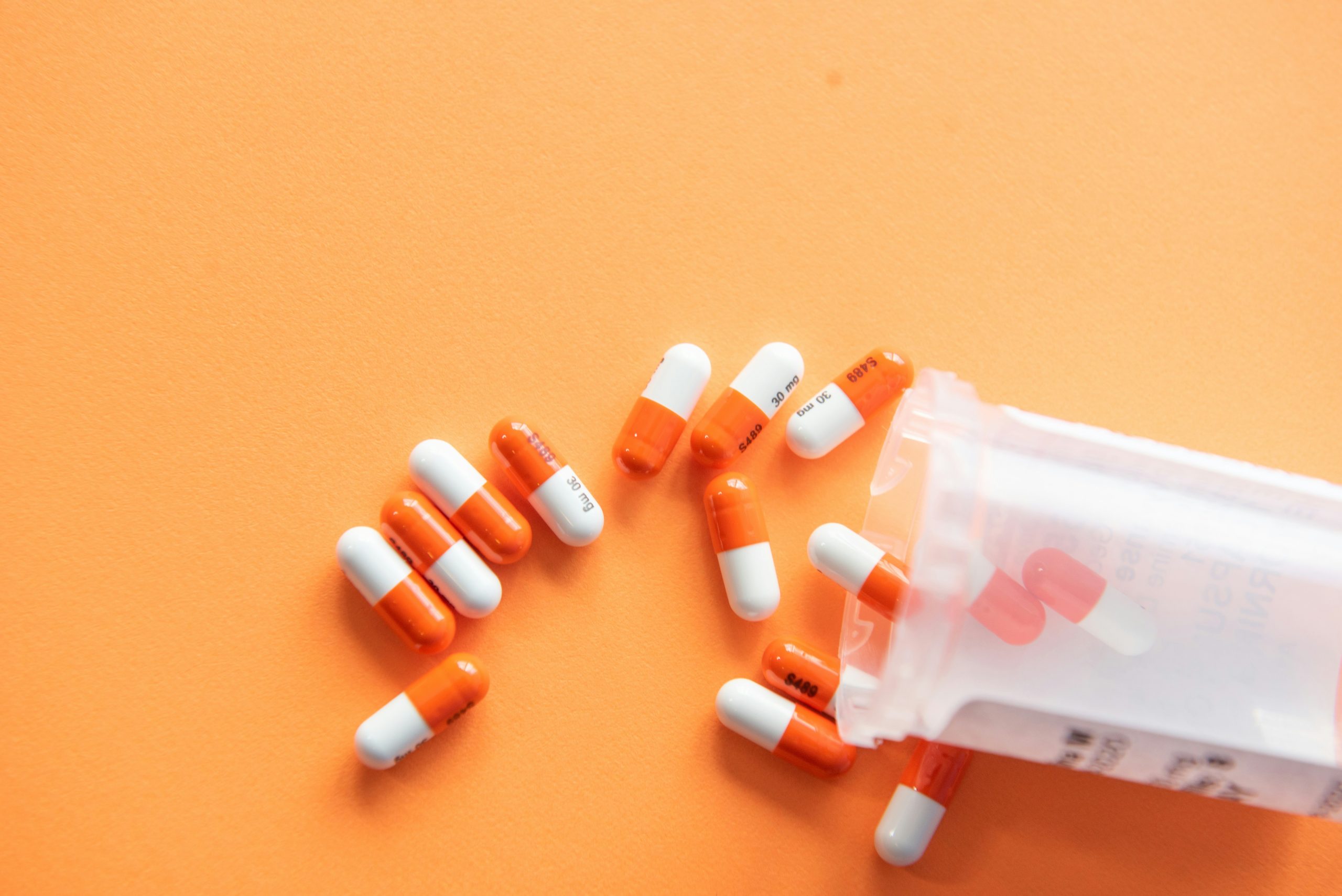
Conventional wastewater treatment plants remove approximately 10% of pharmaceutical residues from wastewater. The rest — antibiotics, hormones, antidepressants, anti-inflammatory drugs — ends up in the aquatic environment. Not because the plants are poorly operated, but because biological treatment is not designed to eliminate compounds that are chemically stable by definition. Pharmaceutical residues resist biological degradation precisely because that is how they are formulated.
Technologies exist that address this problem. Ozonation is one of them, and it works on a fundamentally different principle than conventional treatment.
Why Ozone Works Where Biological Treatment Fails
Ozone (O₃) is a powerful and selective oxidant. It preferentially attacks electron-rich chemical structures — double bonds, aromatic rings, phenolic groups — which are exactly the structures characteristic of most pharmaceutical molecules. It does not inactivate pharmaceutical residues; it breaks them down chemically, converting them into simpler compounds that are more biodegradable and more readily retained on activated carbon in a subsequent stage.
This is the key advantage over adsorption: activated carbon retains micropollutants on its surface but does not destroy them. At some point, the carbon bed becomes saturated and must be regenerated or replaced. Ozone destroys the molecular structure of micropollutants directly in the aqueous phase. The transformation products that result are generally less toxic and more accessible to microorganisms in a downstream biological stage.
Studies by Primozone show that ozonation preceded by a filtration stage removes up to 95% of pharmaceutical residues at a dose of 5 g O₃/m³ of water — a result confirmed in pilot installations operating under diverse real-world conditions.
How Ozone Is Produced and Why It Cannot Be Stored
Ozone is an unstable gas that decomposes rapidly into oxygen, making storage impractical under real operating conditions. It is produced on-site, at the point of use, in exactly the quantity required. This eliminates any logistics associated with storing a powerful oxidant and any risk linked to a hazardous materials depot.
Primozone ozone generators operate on the silent discharge principle — a high-voltage electric field applied to a stream of pure oxygen or dry air produces ozone at high concentrations, with optimized energy consumption compared to conventional generation technologies. The system is compact, can be installed in approximately one day, and integrates directly into an existing treatment process — a real advantage for retrofitting existing plants, where available space and shutdown time for installation work are genuine limiting factors.
The Correct Treatment Sequence
Ozonation does not perform optimally when applied directly to untreated secondary effluent. Residual suspended solids consume ozone inefficiently — oxidizing particulate organic matter instead of targeting dissolved micropollutants. The correct sequence therefore includes a pre-filtration stage before ozone contact.
After ozonation, a sand filter or granular activated carbon filter removes the resulting transformation products and ensures the final effluent quality. The combination of ozonation followed by granular activated carbon filtration is currently considered the reference solution for micropollutant removal at efficiencies above 80%, the threshold set by Directive (EU) 2024/3019 on urban wastewater treatment.
Primozone validated this sequence through a pilot project carried out at 10 wastewater treatment plants across southern Sweden, plants with different process conditions, treatment methods, and demographic profiles. Results were consistent across all installations, confirming the robustness of the technology against the variability of real operating conditions.
When to Choose Ozonation, When to Choose Activated Carbon, and When to Combine Both
The choice between the two technologies, or combining them, depends on the specific micropollutant profile of the effluent and the removal efficiency required.
Granular activated carbon alone is the right solution for plants with a relatively stable micropollutant profile, compounds that adsorb efficiently, and moderate flow rates. It is simple, reliable, and low-maintenance.
Ozonation alone is effective for micropollutants with reactive molecular structures — most pharmaceutical residues fall into this category. Its advantage is that it destroys compounds rather than accumulating them, but it requires a downstream polishing stage to remove transformation products.
Combining ozonation with activated carbon filtration delivers the highest removal efficiency and the greatest flexibility in the face of variations in effluent composition. Ozone prepares micropollutants for adsorption, making them more adsorbable and more biodegradable, which reduces activated carbon consumption and extends the service life of the filter bed. This is the recommended configuration for pharmaceutical plants with complex effluents or strict compliance requirements.
Reference Project: Herlev Hospital, Denmark
Hospitals are concentrated sources of pharmaceutical residues — patients partially metabolize medications and eliminate a significant fraction through urinary effluent. Herlev Hospital in Denmark implemented a system in which Primozone ozone is combined with other technologies to reduce pharmaceutical residues directly at source, before wastewater reaches the municipal network. A relevant model for pharmaceutical plants that want to treat their effluent at source rather than transfer responsibility to the municipal treatment plant.
Would You Like to Assess Whether Ozonation Is Right for Your Facility?
Consultech distributes and installs Primozone ozone generators and HUBER filtration solutions in Romania, providing technical evaluation, design, installation, and technical support for fourth-stage treatment.
Every facility has a different wastewater profile — flow rates, micropollutant type, existing infrastructure. A site-specific technical evaluation is the only correct way to size a solution. If you would like to take that step, contact us.
A Consultech engineer will respond within 48 hours.
