Agriculture is undergoing an accelerated transformation. Cost pressures, climate volatility, environmental requirements and raw material deficits are pushing farmers to rethink how they utilize available resources.
The clear direction for the future is the transition from consumption-based agriculture to one based on recovery, optimization, and the integration of industrial flows.
Waste becomes raw material
A fundamental paradigm shift is necessary: farmers must stop viewing manure, digestate, or other co-products as merely logistical problems or compliance issues.
Digestate is not waste; it is a valuable resource. This same approach applies to agri-food by-products, plant residues and secondary processing flows. With the right technology, these resources can be converted into energy (biogas and biomethane), solid organic fertilizers (with high phosphorus concentrations), liquid fertilizers with available nitrogen, feed ingredients, or even entirely new revenue streams for farms. We cover every stage of this process: from consulting and auditing to project implementation and service.
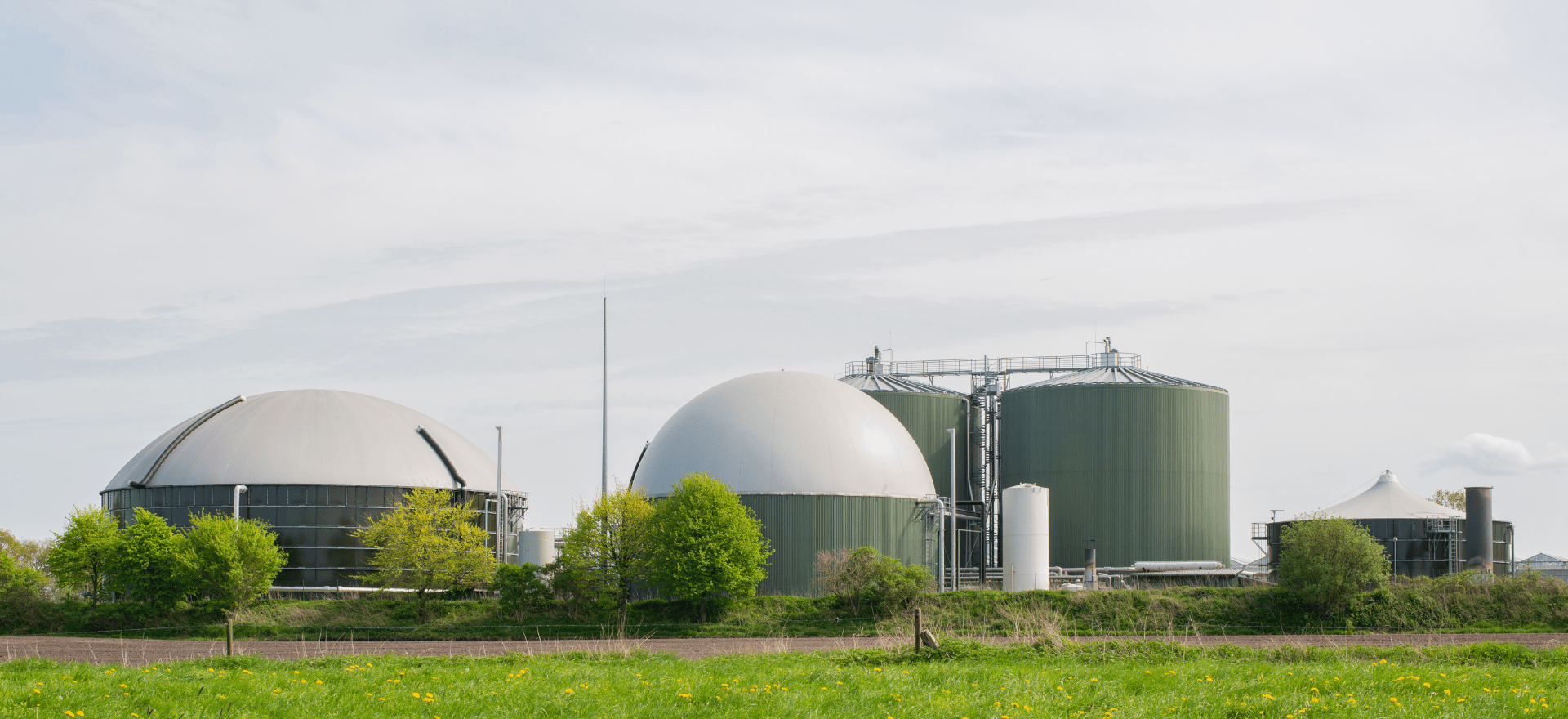
Biogas and biomethane: An ignored but massive potential
There are four main types of biogas plants: manure-based, crop-based, organic waste-based, and mixed plants.
The region holds potential in all these categories, but the greatest competitive advantage lies in livestock farms (cattle, pigs, poultry) where manure is already collected but insufficiently capitalized upon.
With the Flottweg technologies we implement, farms can:
- Efficiently separate the solid fraction from the liquid fraction.
- Obtain a solid fertilizer rich in Phosphorus (up to 60–95% captured in the solid phase).
- Produce a liquid fraction with easily available Nitrogen for their crops (70–90% of nitrogen remains in the liquid).
- Significantly reduce transport and land application costs.
- Prepare digestate for advanced technologies such as Zero Liquid Discharge (ZLD).
Zero Liquid Discharge (ZLD) – Maximum water efficiency
We are a key provider of the foundational technologies for ZLD (Zero Liquid Discharge) systems, which are essential for:
- Eliminating nutrient loss.
- Recovering treated freshwater for reuse.
- Transforming solids into marketable products.
- Reducing the water footprint of the farm or processor.
- Facilitating access to European funding.
We provide pre-treatment and mechanical separation, plant sizing, integration with existing systems and complete consulting for upstream and downstream flows.
Valorization of by-products: A self-sustaining industrial chain
Many farms or processors lose significant sums annually by disposing of by-products at a cost. Whether we are talking about cereals, the food industry, or poultry processing, integrated solutions can change the economic equation.
- The co-product becomes an ingredient for the feed industry.
- Separated fractions can be standardized (Total Solids – TS, protein, fiber).
- Disposal and transport costs are reduced.
- Potential for new business lines emerges (oils, proteins, press cake, meals).
Processing plant-based alternatives: A growing market
Production flows for plant-based milk (oat, soy, almond) are already present in the region and processing them to high standards requires automated separation lines.
Through our partnerships (Flottweg, HRS), we deliver complete modular lines that include fine separation with decanters, thermal recovery for energy efficiency, and advanced CIP (Clean-in-Place) systems for hygiene and continuity.
Consultech – Your integrated technology partner
We position ourselves as a partner for regional farmers and processors, offering concrete solutions in five major directions:
- Biogas & biomethane: Sizing, mechanical separation (Decanters, Tricanter®), digestate treatment, and grid injection preparation.
- Nutrient recovery: Solutions for obtaining fractions rich in Phosphorus and Nitrogen, reducing dependence on chemical fertilizers.
- By-product processing: Stabilization, dewatering, and standardization for the feed industry.
- ZLD Solutions: Complete integration for water recovery and advanced filtration.
- Audit, implementation and local service: From process audit and design to installation, commissioning, and maintenance with original parts from local stock.
For the regional agriculture, the next step means integrating modern recovery technologies, transforming secondary flows into profit, and preparing farms for a sustainable and profitable future.
We are here to make this transition possible. If you wish to evaluate the potential of your farm or processing facility, contact us for a dedicated technical audit.