


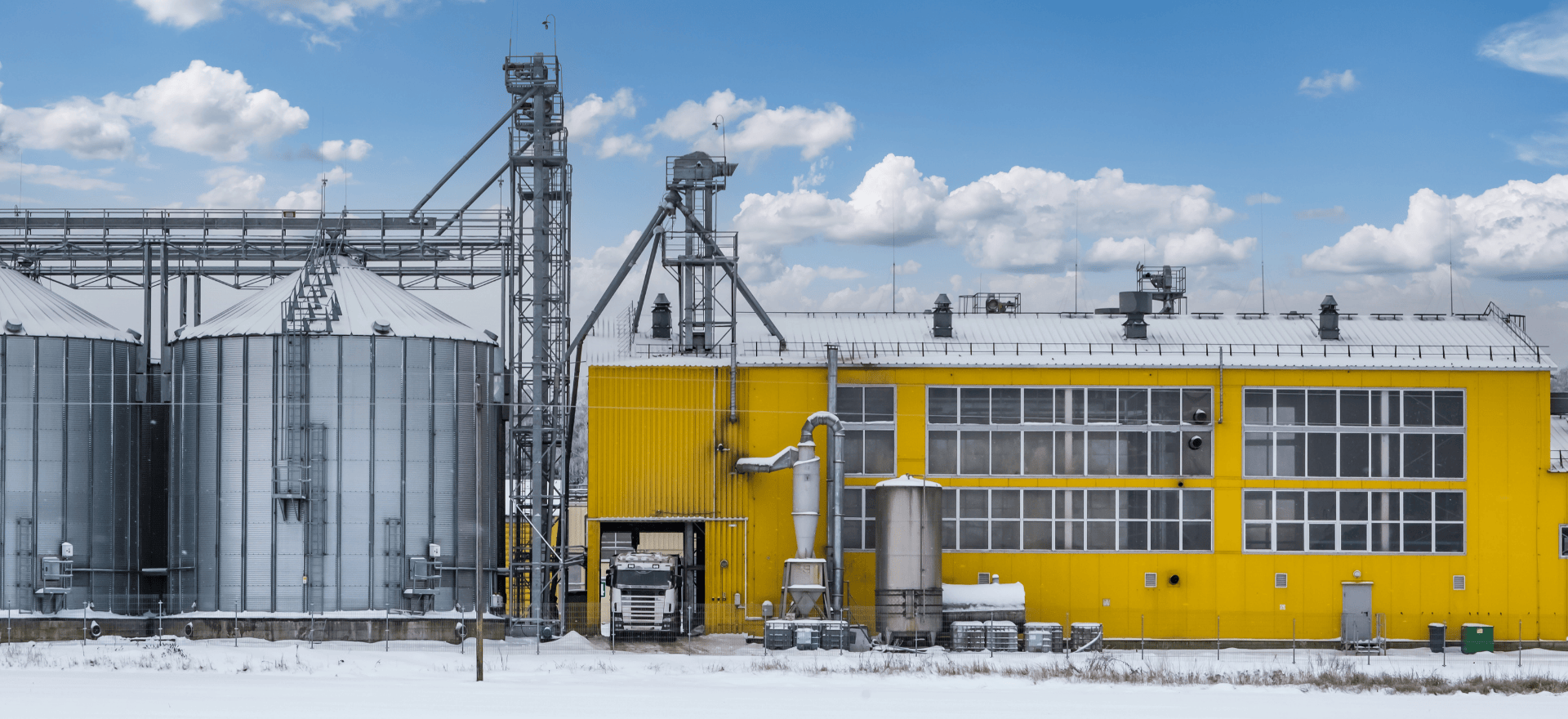
Winter imposes significant strain on industrial utilities and processes in the region. Low temperatures, large flow variations, high energy consumption and the vulnerability of uninsulated installations turn the winter months into a period of high operational risk.
Field experience demonstrates that for many factories, particularly in food processing, dairy, brewing, meat processing, feed production, light chemicals and water treatment, winter is synonymous with a noticeable increase in costs. Furthermore, over half of industrial operators face a drop in efficiency caused by thermal losses and disruptions in utility networks.
In this context, reactive maintenance or improvised adjustments are no longer sufficient. Companies with efficient workflows treat winter as a critical phase requiring preventive audits, preparation, optimization and rapid intervention capabilities.
Why do costs and risks rise during the cold season?
1. Energy losses in hot water and steam networks
The European Energy Efficiency Agency (EEA) indicates that up to 30% of thermal energy can be lost through damaged insulation or exposed overhead piping. In Romanian factories, losses are often even higher due to aging technologies and insufficient or inefficient maintenance. According to ASHRAE, a single millimeter of fouling in heat exchangers can reduce thermal efficiency by 6–10%.
2. Freezing risk in water, polymer and CIP Lines
In wastewater treatment, dairy, brewing and feed industries, freezing is the primary cause of point failures. Exposed pipes, vertical coils, wash nozzles, or chambers containing residual water become critical pain points in production. Specifically, freezing can cause:
- Damage to pumps and mechanical seals.
- Cracking of heat exchangers and cooling jackets.
- Blockage of decanters or centrifuges due to flow reductions.
- Energy consumption increases of up to 35% for “cold starts”.
3. Decreased efficiency of cooling towers and chillers
A biofilm layer of just 0.1 mm can reduce heat transfer by 20–30% (according to the Cooling Technology Institute). In winter, when water is colder and viscosity increases, this effect is amplified, forcing compressors to work under intense loads.
4. Lubricant viscosity and equipment wear
At low temperatures, hydraulic oils lose their optimal fluidity. Consequently, hydraulic pumps and centrifuge bearings are forced to operate at higher pressures, accelerating premature wear. Risks are high, but not inevitable
Transitioning from reactive maintenance to Planned Preventive Maintenance (PPM) and continuous monitoring can reduce downtime by 20–30% and energy bills by 10–15%.
The challenge does not come from the season itself, but from a lack of preparation: compromised insulation, non-functional heat tracing systems, inadequate chemical treatment, or the use of non-OEM parts that fail under thermal shock.
What can a factory do to reduce consumption and risks during the winter?
We view the cold season not as an emergency to be managed, but as a well-phased technical project handled preventively.
1. Full technical audit (pre-season)
We analyze every system: cooling, steam, hot water, CIP, decanters, towers, chemicals and pumps. We verify:
- High-risk freezing zones.
- Thermal agent losses.
- Fouling levels in exchangers and chillers.
- Insulation integrity on piping routes.
- Efficiency of the current chemical program.
- Equipment requiring Preventive Maintenance (PPM) before the cold sets in.
- Critical parts inventory.
2. Immediate operational measures
- Insulation and heat tracing: We perform thermographic analysis on exposed routes and remediate losses before freezing occurs.
- Correct water treatment (cooling, steam, process): We implement chemical treatment programs that reduce scaling by 80–90%, corrosion in steam networks by 60%, and keep biofilm under strict control.
- Thermal optimization: By using HRS heat recovery systems and chemical cleaning, we can increase the thermal efficiency of heat exchangers and cooling towers by 10–20%.
- Preparation of decanters and presses: We perform drainage, winter-specific oil changes, air purging and verification of wash loops.
3. Rapid intervention in case of failure
For the equipment we supply, we cover the entire support cycle:
- Rapid on-site interventions.
- Local stock of OEM parts and consumables.
- Certified technicians (AGFR, ANRE, INSEMEX, BOSIET).
- Service executed according to ISO 9001/14001/45001 standards.
4. Energy optimization with rapid ROI
Industry data confirms the savings potential (Sources: Eurostat, EEA, CTI):
- Correct insulation of piping reduces steam consumption by 10–15%.
- Disinfection and biofilm control can increase tower efficiency by 20–40%.
- Clean heat exchangers yield energy savings of 8–12%.
- Hydraulic optimization of pumps lowers consumption by 10–20%.
Impact: For a medium-sized factory, these measures can generate total savings of over €40,000 – €120,000/year.
Winter doesn’t have to be a season of uncontrolled costs
Through correct auditing, planned maintenance and solid partnerships for intervention, regional factories can turn the winter months into a stable and predictable period.
If you want a plan adapted to your installation, we can offer an initial technical assessment and a complete winter preparation strategy.


