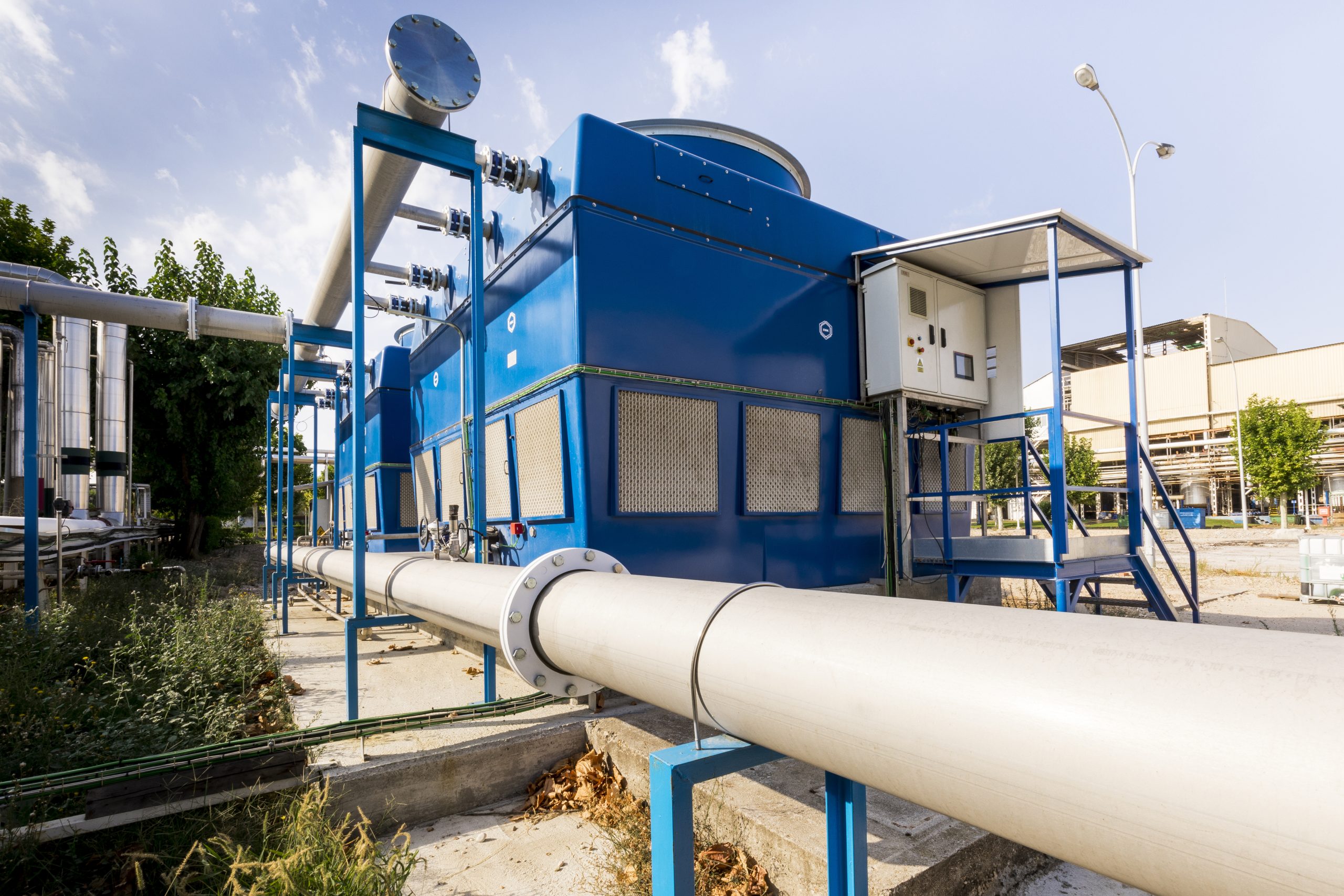
Winter brings real risks for separation equipment: circuits freezing, increased oil viscosity, condensation inside electrical cabinets and accelerated corrosion. Planning and preparing installations in advance helps prevent costly failures, maintain compliance with standards and ensure efficient operation during the cold season. In practice, this translates into shorter downtime, fewer emergency interventions and stable processes without excessive energy consumption caused by cold starts.
Universal steps for preventing freezing and winter-related failures
1. Remove residual water from areas exposed to freezing: oil coolers (hydraulic, lubrication, cabinet), wash/flush/CIP water lines, polymer/flocculant circuits, product feed and sludge lines. Open all drains; for ball valves, a ~45° position helps drainage. Where gravity cannot do the job, blow out with dry air. Pay attention to water “trapped” behind solenoid valves. In some cases, the equipment must be energized to achieve complete drainage.
2. Inspect the water system from end to end: long pipe runs, vertical cabinet cooler coils, pumps, feed and wash lines. Insulate and/or install a heat-trace system; verify thermostats and control units.
3. Oils and lubrication: Confirm the correct viscosity grade suitable for local minimum temperatures; activate oil bath heaters where available. Short “jog” cycles help ensure even oil distribution.
4. Electrical & control systems: Turn on anti-condensation heaters inside electrical cabinets; check seals and ventilation filters; keep UPS systems charged; record vibration and temperature baselines before long shutdowns.
5. Chemicals & CIP systems: Drain and flush polymer/flocculant circuits, then blow out with air; pH/redox probes can be stored in preservation solutions; electromagnetic flow meters must be drained or protected from freezing. For sensitive loops, use food-grade propylene glycol (where permitted), at concentrations suited to local minimum temperatures.
6. Periodic stand-by: Every 1–2 weeks, briefly rotate the bowl or rollers (to prevent wear) and check vibrations; upon restart, gradually increase temperature and perform a wet test at low flow rate.
Winter maintenance for Flottweg equipment
Decanter centrifuges / Tricanter® / Sedicanter®
- Completely drain water from oil coolers (hydraulic, lubrication, cabinet), flush and feed lines.
- For the Tricanter®, drain both liquid phases and verify the position of the adjustable impeller; if you have an inertized (ATEX) variant, maintain dry nitrogen pressure.
- For the Sedicanter®, clean soft-sediment channels to prevent frozen deposits. Check the Simp Drive® and differential speed parameters to ensure controlled restart.
- Drain the solids chambers and recirculation/wash lines to keep the nozzles clean and free from deposits that could freeze.
- Check the closed lubrication circuit and the drive belt condition, ensuring it is either correctly tensioned or relaxed, according to the manufacturer’s recommendations for extended stand-by.
- Protect the separation liquid by verifying its concentration so that its freezing point is lower than the minimum ambient temperature in the hall.
- Drain or maintain temperature in tanks, pipelines, and pumps. For long downtime periods, flush the system to prevent crystallization and blockages.
- Wash and dry the press, release belt tension as specified in the manual, and lift the belts off the rollers where applicable.
- Drain the wash galleries and high-pressure nozzles, then blow them out with air.
- Remove condensate from pneumatic systems, lubricate bearings, and inspect stainless steel rollers.
- Upon restart, re-tension the belts and perform a wash test.
How to keep plant infrastructure safe at sub-zero temperatures
Beyond equipment maintenance, outdoor pipelines must be properly insulated, with slopes and drainage points at low elevations. If there is direct exposure to freezing, install thermostat-controlled heat-trace systems, which can save equipment during very cold nights.
Sensitive cooling or process water loops can be protected with food-grade propylene glycol, at a concentration calculated for local conditions. Inside electrical cabinets, anti-condensation heaters and filtered ventilation keep electronics dry. Before the cold season, it is advisable to check alarm functionality and vibration and temperature logs, so that at restart you know exactly what “normal” means for your installation.
How to adapt winter maintenance based on stand-by duration
For short shutdowns (a few days, at negative temperatures), draining water lines, keeping heaters active, and periodically rotating equipment are usually sufficient.
However, for extended stand-by periods (weeks or months), a full maintenance program is required: complete draining and air blowing, belt or drive relaxation, surface protection, and a clear restart checklist (oils, vibration, alignment, sealing). This approach makes restarting a predictable and safe process, not a gamble.
How to turn winter equipment maintenance into a structured and safe plan
We approach winter preparation as a project. It starts with an audit of the water loops, operating water panels, CIP, lubrication and electrical systems, followed by a custom preparation kit: quick-drain fittings, air couplings, insulation and heat-trace systems, anti-freeze sensors, crankcase heaters and food-grade glycol where permitted.
We provide clear operating procedures for your team: equipment checklists, stand-by routines and restart protocols – and offer seasonal service: assisted draining, inspections, sensor calibration and local-stock parts and consumables.
This way, you’ll have a winter without surprises and a spring without costly delayed repairs. If you’d like a plan tailored to your equipment, let us know the minimum ambient temperature, whether you have heat-trace systems and insulation, what fluids circulate (water, brine, glycol) and how long you expect the stand-by period to last.